
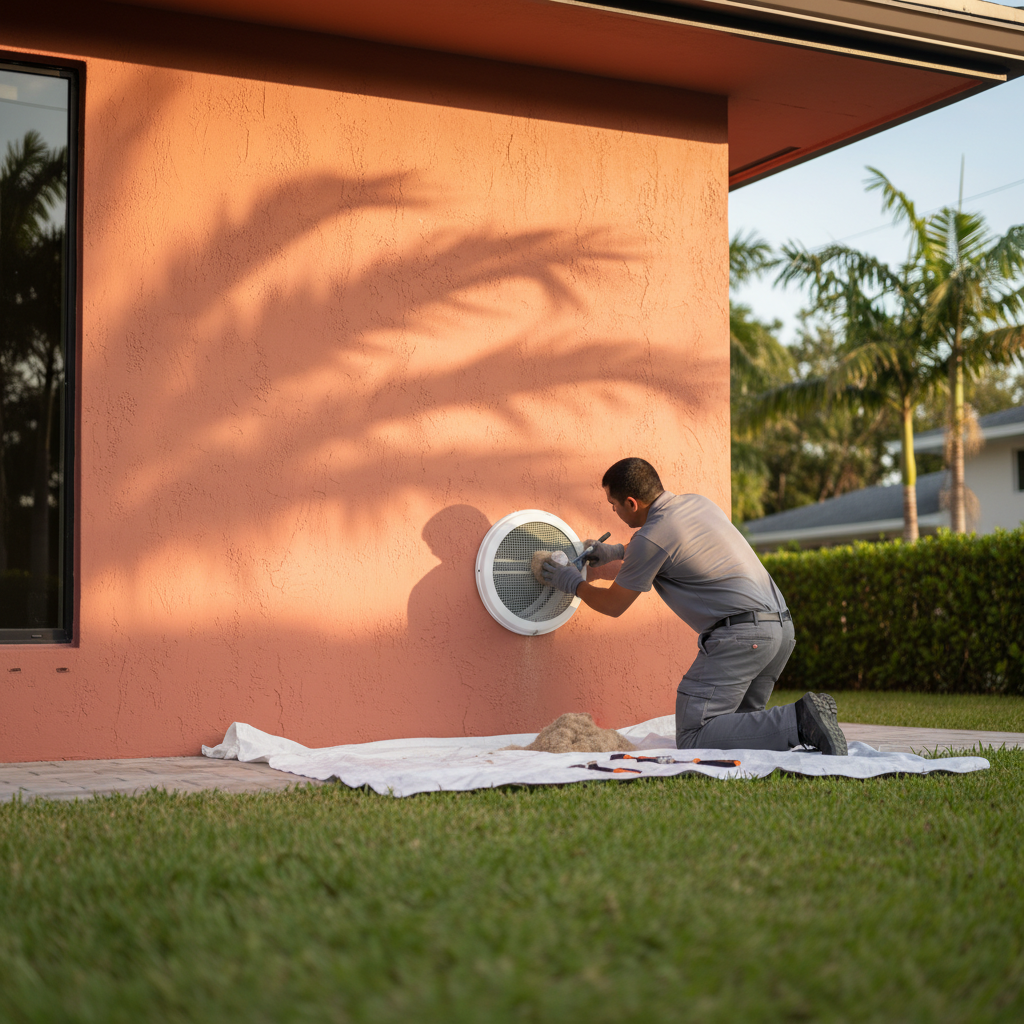
The lint screen catches most of the lint, but not all of it. The rest goes down the vent line inside your wall, and over months it builds up until the dryer can't push hot, damp air outside. The U.S. Fire Administration counts about 2,900 home dryer fires a year, and failure to clean is the leading cause. These are the signs a vent is getting there.
The 7 warning signs
- Clothes need two cycles. A normal load should be dry in one cycle, usually 35–45 minutes. If towels are still damp after that, the moist air has nowhere to go.
- The dryer or the clothes are very hot to the touch. Trapped heat stays in the drum instead of venting out.
- The laundry room feels hot and humid while the dryer runs. Air is leaking back in instead of leaving the house.
- A burning smell. Lint is highly flammable, and a hot smell is lint near the heating element or in the line. Stop using the dryer until it's checked.
- The outside vent flap barely opens. Go outside while the dryer runs. You should feel a strong stream of warm air, and the flap should open wide.
- Lint around the outside vent or behind the dryer. Lint where it shouldn't be means it's backing up.
- It's been more than a year, or you can't remember. Lint builds up even when everything seems fine.
Why it happens
Some vents clog faster than others. The usual culprits are long runs, many turns, and the wrong duct material. The residential building code generally limits a dryer duct to 35 feet, minus 5 feet for every 90° elbow, unless the dryer's manufacturer allows more. Many condos and townhomes in South Florida exceed that, with vents running through interior walls to the roof.
Soft, crinkly foil or vinyl transition hoses are another common cause. They sag, crush behind the dryer and trap lint in every ridge. Smooth rigid metal duct is what you want inside the wall, with a short, approved transition hose behind the machine.
Outside, bird nests, wasps and a stuck flap can block the termination entirely. In Miami we see this a lot with roof caps.
What you can do yourself
- Clean the lint screen before or after every load.
- Wash the screen with soap and water every few months. Dryer sheets leave a film that blocks airflow even when it looks clean.
- Pull the dryer out once a year and vacuum behind it. Check that the transition hose isn't crushed or kinked.
- Check the outside flap while the dryer runs.
When to call a professional
The part you can't reach is the vent line inside the wall, and on many homes the roof termination. Fire-safety groups recommend having the vent cleaned regularly. We recommend every 6–12 months for busy households, and right away if you notice any of the signs above, especially a burning smell.
A proper service clears the full line from the dryer to the outside with a rotary brush, cleans the termination cap, removes lint from behind the dryer's back panel, and tests airflow before and after so you can see the difference.
Quick answers
- How often should a dryer vent be cleaned?
- At least once a year, and every 6 months for large families, long vent runs or roof terminations. Clean the lint screen after every load as well.
- Can a clogged dryer vent cause a fire?
- Yes. The U.S. Fire Administration reports about 2,900 home clothes dryer fires each year, and failure to clean is the leading cause. Lint is highly flammable, and a blocked vent traps heat right next to it.
- Does a clogged dryer vent waste energy?
- Yes. A dryer that needs two cycles uses roughly twice the energy per load, and the extra heat also works against your AC.